Grief in childhood rarely looks like grief in adults. A child might cry hard for five minutes, then ask for a snack, then explode over the wrong color cup. They may tell you they are fine and draw a picture that quietly says otherwise. When someone important dies or disappears through divorce, incarceration, or deployment, children test the world to see what is still safe. Grief counseling helps them run that test in a contained way, so they can keep growing while they mourn.
How children understand loss
Adults tend to think about death as permanent and universal. Children piece that together over time. A preschooler might believe that being “very careful” can stop people from dying. A 7-year-old usually understands that death is final, but they may imagine precise mechanics that make no biological sense. By adolescence, most teens grasp the abstract reality, and still they can feel ambushed by waves of sadness or anger when a holiday, a song, or an awkward silence triggers the absence.
The developmental lens matters in every decision we make. If we offer explanations that overshoot a child’s cognitive stage, they nod to be polite and leave more confused. If we under-explain, they fill gaps with private logic, and that logic can be harsh. I still remember a 6-year-old who believed her crankiness caused her grandfather’s heart attack. It took careful, repetitive conversations and a simple diagram of the body to free her from that burden.
The first sessions: what happens and why
A typical grief counseling plan starts with gentle structure. I meet caregivers first to gather facts and to hear the family story in their own words. We talk about routines, past separations, sleep, appetite, school, and any family beliefs around death. I ask for the child’s exact language about the loss. If the child calls it “the great goodbye,” I use that phrase, not mine.
With the child, the first session is mostly orienting. I show the room and the tools we might use: art supplies, figures, sand, puppets, soft blocks, a feelings chart that uses faces instead of big words. I explain privacy in simple terms: I will not keep dangerous secrets, but I won’t report every drawing either. Many children relax once they know adults will not pass along every sentence to every relative.

I also set a steady rhythm. Sessions often run 45 to 60 minutes, weekly at first. Predictability supports the nervous system. Grief is chaos enough; therapy should be a place where the rules do not change.

Play is the child’s language
When adults talk, children play. That is not a slogan, it is how their brains integrate experience. In grief counseling, play can be freeform or guided. In free play, a child may bury toy animals, then unbury them, again and again, while narrating who comes to help and who does not. In guided play, I might offer a memory box activity or a “feelings tower” built from colored blocks, each color linked to a body sensation.
Attachment therapy principles weave through this work. Loss activates the attachment system, the primal drive to find a safe other. So I track the relational field: How does the child seek help? How do they react when I step away to retrieve a marker? Does a small rupture get repaired quickly with a glance or a word? These micro-moments tell us how grief, stress, and prior attachment patterns are interacting now.
Trauma therapy and grief: where they overlap and where they do not
Not all grief is trauma, and not all trauma includes grief. If a child’s person died after a long illness with honest family communication, the death may be sad but not traumatic. If the death was sudden, violent, or surrounded by secrecy, the child may also carry traumatic stress. The difference shows up in the body and the storyline. Trauma therapy focuses on restoring a sense of safety, updating a stuck nervous system, and organizing memories that feel frozen or jagged. Grief counseling focuses on integrating absence, rebuilding meaning, and continuing bonds with the person who died.
When both are present, sequence matters. If a child startles at hallway noises or cannot sleep without a light because nightmares replay the event, we address those survival responses first. It is hard to grieve when the house is still on fire in your nervous system. Stabilization can be as practical as a bedtime routine that cues safety or as clinical as an evidence-based method for traumatic stress. I often blend approaches: grounding games, predictable rituals, and, when appropriate, structured trauma therapy elements such as narrative work or gradual exposure, titrated to the child’s pace.
Somatic therapy and movement: letting the body speak
Grief lives in the body. Shoulders climb toward ears. Stomachs clench before school. Legs feel heavy on days that carry anniversaries, even if the child cannot name why. Somatic therapy gives children a vocabulary for those signals. I might ask, Where in your body is the sad today? What size is it? Does it have a color? Children answer with surprising precision. Once named, sensations loosen.
Movement therapy adds another path. Not every child wants to sit and talk. Short sequences like “push the wall, push the floor” help release braced muscles. A simple sway can soothe. For younger kids, animal movements - bear walks, snake slithers, flamingo balances - restore rhythm and control. I often use mirroring: the child chooses movements and I follow. This co-regulates without a lecture about regulation. Five minutes of shared movement can settle a session that was skirting meltdown.
There are trade-offs to consider. Highly active exercises can rev up a child who already runs hot. For a child who shuts down, stillness practices can deepen numbness. The art is in titration, a therapist’s word for adding or reducing intensity one notch at a time, always watching the child’s face, breath, and posture for cues.
Telling the story without forcing it
Children reorganize their world by telling the story of what happened in pieces. The job is to help those pieces line up without making the child re-live pain all at once. I use layered storytelling. First, we name the day using basic facts the family agrees on. Later, we add thoughts and feelings. Over time, we include what changed since. If something is unknown - a medical detail, what the person felt in their final moments - we can say we do not know. Honesty is a balm. When adults gloss over gaps, children fill them with fear.
I keep a steady eye on dosage. A rule of thumb: enough detail to make sense, not so much that the child floods. One 9-year-old wanted to draw the scene of his father’s car accident in rough lines without faces. We paused after each new element and took three slow breaths together. He finished with a picture of his grandmother waiting at home with soup. That last image mattered. It anchored the story in care.
Supporting caregivers: the real engine of change
Therapy with children includes therapy with adults, even when adults are not the identified clients. Caregivers hold the daily environment. They carry their own grief while trying to parent. That double load is heavy. I set aside regular time just for them, sometimes alternating child sessions with parent sessions. We practice specific skills: noticing when a child’s behavior is grief in disguise, shaping a calm bedtime, using concrete language when kids ask hard questions.
Many families ask what to say. Here is a short, workable starting place that I share often.
- Use simple, direct words for death or loss, and repeat them the same way each time. Answer questions as they come, in brief doses, and check what the child understood. Keep routines sturdy, and add one small ritual each day to notice the person who died. Validate feelings without fixing them, and model how you cope in age-appropriate ways. Invite movement and play after heavy talks, so the body can reset.
Caregivers also worry about doing it wrong. They sometimes fear mentioning the person who died will “reopen the wound.” In practice, children notice the silence. They often feel relief when adults speak the name out loud. A daily ritual can be as small as lighting a candle for one minute at dinner or placing a pebble in a memory jar whenever the person comes to mind. The point is not to perform grief but to normalize it.
School and peers: where grief shows up sideways
Teachers are partners. After a death, I ask caregivers to share a short note with the child’s school. It helps to list practical accommodations for the next 6 to 8 weeks: flexibility with homework, permission to step out for a break, a plan for testing days, a safe adult the child can see without fuss. I sometimes coach older children to write their own script for what they want peers to know. A sentence or two, clearly rehearsed, reduces social dread.
Watch for the sideways signs. A third grader may stop raising a hand in math. A teen who loved soccer refuses practice because the parent who died always drove them. These are not random. Grief attaches to activities that remind the child of the person or emphasize the new absence in logistics. Naming that link often unlocks a compromise. Maybe a neighbor drives to practice for a few weeks while the coach sets up check-ins that do not feel like pity.
When grief gets stuck
Most children swing between grief and play as they heal. Their mood is like a tide, not a straight line. That said, some patterns point to the need for more specialized care. If, months after the loss, a child cannot rejoin peers, shows a sharp drop in school performance, or acts out with aggression that frightens the family, we look closer. Nightmares that do not ease, severe separation anxiety that traps everyone at home, or a rigid refusal to talk about the person who died can signal complicated grief or trauma responses. A thorough assessment rules in or out contributing factors like learning difficulties or preexisting anxiety.
Even then, avoid panic. I have seen children who looked stuck begin to move with a single new ingredient in the environment: a stable mentor, a weekly ritual, or a change in a parent’s schedule that allowed consistent dinner time. Children live at the mercy of adult calendars. Small structural changes often unlock large emotional shifts.
Rituals and meaning-making across cultures
Families grieve within cultures that carry specific beliefs about death, the body, and the afterlife. Some families hold open-casket viewings, others forbid children from funerals, others share collective meals for days. I ask families to teach me their customs. I also ask what parts they want to keep and what parts felt overwhelming. A 10-year-old boy from a family with long wake traditions kept sneaking out of the room because the crying felt “too loud.” In session we built a private ritual he could do in the hallway: three squeezes of his own hands, a quick drawing in a pocket notebook, then back into the room with a plan. He later taught the ritual to his younger cousin. Children step into leadership when given permission.
Religious language can soothe or strain. If a family says, “She is in heaven,” I mirror that. I also clarify that bodies stop working and do not return, to avoid confusion about “coming back.” If a family holds secular beliefs, we use language like, “His body died, and we remember him in our actions and stories.” Consistency between home and therapy reduces the child’s cognitive load.
Measuring progress without turning grief into a project
We track changes we can see and feel. Sleep settles. Mornings take less battle. A child returns to an activity they had abandoned. Anger outbursts shorten from 45 minutes to 10. The child uses words like “sad and mad together” instead of kicking a chair. These markers matter more than a neat curve on a calendar. Grief has seasons. Anniversaries and birthdays often bring a spike in symptoms. That is not a failure of therapy; it is a feature of love.
I sometimes use short, child-friendly check-ins every few weeks. What color is grief today? How big is it, on a scale from a pebble to a backpack? What helps the backpack feel lighter? Over time, children build a personalized menu of supports, which is more durable than any worksheet.
A brief vignette
A 7-year-old girl, Maya, arrived three weeks after her mother died of cancer. She was refusing to sleep alone and had begun wetting the bed after two dry years. In the room, she lined up animal figures and put the smallest one in a tissue-box “hospital.” Every time the small one lay down, Maya knocked over the box. When I mirrored, she frowned hard and said, “No more boxes.”
We slowed down. Through somatic therapy techniques, we named where worry lived in her body - “tiny bees in my tummy.” I taught her a movement sequence called push and pull: press palms against mine for three breaths, then pull a stretchy band. The buzzing softened. We created a night ritual: a two-minute “mother stories” time, a song her mother used to hum, then a caregiver-guided body scan where they found and brushed away the “bees.” I met with her father to set up a consistent response to night waking: one check-in, a glass of water, back to bed with a weighted blanket that Maya chose.
By week five, bedwetting had reduced from nightly to once a week. Maya began drawing mother-and-daughter cooking scenes. In session nine, she built a “grandma school” with blocks and put the smallest animal in the front row. She told me, “She learns about love at school.” We honored a monthly remembrance ritual with her family - pancakes on the first Saturday, her mother’s favorite. Months later, her father reported that Maya had taught her cousin the push and pull when he felt “hurricane mad.” Children who heal often become teachers.
When words are not the way
Some children are not ready, not willing, or not able to use language as a primary tool. Nonverbal kids, minimally verbal kids, and kids on the autism spectrum often show grief through behavior, sensory patterns, and routines. Movement therapy becomes core. I might shape sessions around rhythm: drumming, walking paces, call-and-response claps. Visual schedules ease transitions. The work still includes grief counseling, just without the demand for narrative speech. Caregiver coaching takes center stage to generalize skills at home.
Telehealth and access
Since 2020, more families have sought telehealth for practical reasons. Grief counseling can work online if we prepare. I ask families to set up a small “therapy kit” at home: a handful of figures, paper, crayons, two fidgets, and a soft item. We plan a privacy signal if someone enters the room. The pace online is often slower, with more breaks for movement. Some techniques - sand tray therapy, for example - do not translate perfectly. Others, like drawing together, can be intimate even on a screen. The key is flexibility, not forcing the office model into a living room.
Access also has a cultural dimension. Some communities have deep mistrust of formal mental health care. Partnering with faith leaders or community mentors can reduce barriers. I have held joint sessions with a family’s pastor or an aunt who functions as a cultural guide. The goal is not to professionalize grief but to support the natural supports already present.
A practical roadmap for the first month
Families often ask for a concrete plan. Here is a simple sequence that tends to hold up across many situations.
- Week 1: caregiver meeting to gather history, define language for the loss, and set up safety and routines. Week 1 or 2: first child session focused on orientation, play space tour, and body-based grounding games. Week 2: caregiver coaching to align responses at home, including a small daily remembrance ritual. Week 3: child session introducing memory work at the child’s pace, with art or narrative play. Week 4: review signs of progress and stress, adjust sleep and school plans, schedule a check-in near any known trigger dates.
This is not a script. It is a scaffold. Real families need improvisation.
What to avoid, even with good intentions
There are a few common traps. Euphemisms confuse. “We lost grandma” leads some children to search the grocery store. Promises that no one else will die are comforting in the moment and brittle later. Overexposure to adult grief can either flood children or pull them into a caretaking role they are too young to hold. Total silence has its own risks, teaching that grief is a private shame.
Therapists, too, must watch for performance instincts. A polished intervention is less useful than a warm, reliable presence who adjusts to the child’s pace. If a technique leaves a child more tense than before, set it down and wait.
Integrating Attachment therapy principles at home
Attachment therapy is not a separate room with special furniture. It is a way of seeing and responding. At home, that looks like predictable availability, quick repairs after conflicts, and shared joy that has nothing to do with fixing mood. Five-minute “micro-rituals” make https://spiralsandheartspacehealing.com/consultation a difference: a secret handshake before school, a drawing swap after dinner, or a Friday song in the car. When a child melts down, start with proximity and curiosity. Your calm body is the intervention. Words can follow.
Where grief counseling meets hope
The aim is not to erase sadness. It is to help children carry it without breaking. I have met teenagers who can say, my mom died, I miss her, and I also love robotics club. That “and” is the hinge. Grief counseling, enriched by trauma therapy when needed, supported by somatic therapy and movement therapy, and held within a steady attachment frame, moves children toward that hinge.
Across hundreds of sessions, the most consistent healing forces are ordinary: truthful words, steady routines, chances to move, safe adults who tolerate big feelings, and rituals that honor love. Children do not need perfect sentences. They need your presence, your willingness to learn their signals, and a room - literal or figurative - where grief can stretch without swallowing the rest of life.
If you are a caregiver wondering whether to start, it is not too early and not too late. Even brief support can shift a child’s trajectory. If you are a clinician, keep your tools close but your attention closer. Let the child lead in ways that fit their stage. If you are a teacher, you are already part of the safety net. Together, we help children remember, adapt, and keep growing. That work is quiet and, over time, profound.
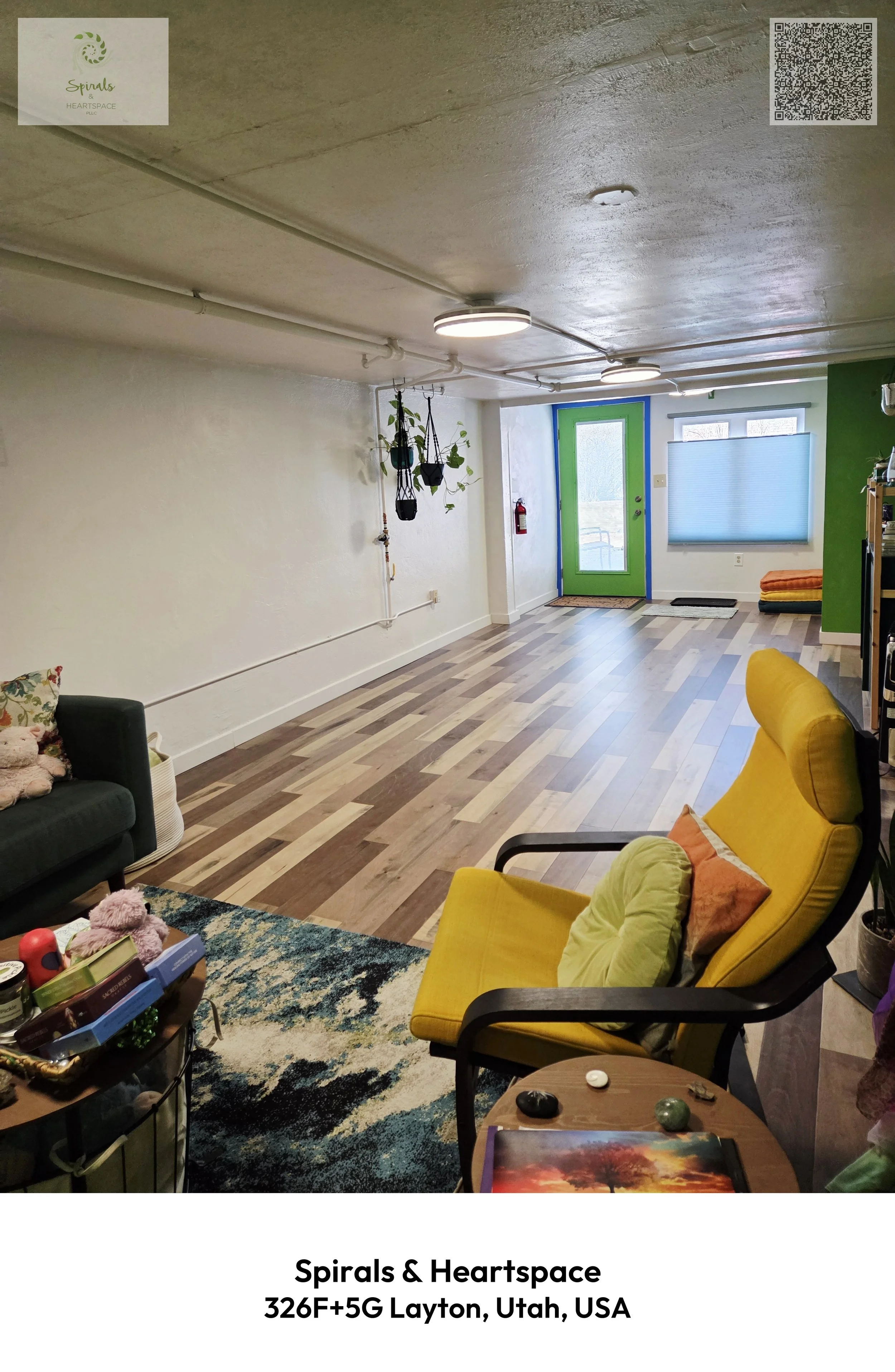
Spirals & Heartspace
Name: Spirals & HeartspaceAddress: 534 W Gentile St, Layton, UT 84041
Phone: (385) 301-5252
Website: https://spiralsandheartspacehealing.com/
Hours:
Sunday: Closed
Monday: 9:30 AM – 7:00 PM
Tuesday: 9:30 AM – 7:00 PM
Wednesday: 9:30 AM – 7:00 PM
Thursday: 9:30 AM – 7:00 PM
Friday: 9:30 AM – 7:00 PM
Saturday: Closed
Open-location code / plus code: 326F+5G Layton, Utah, USA
Coordinates: 41.0604503, -111.9762128
Map/listing URL: https://www.google.com/maps/place/Spirals+%26+Heartspace/@41.0604503,-111.9762128,766m/data=!3m2!1e3!4b1!4m6!3m5!1s0x875303311f1d4d1b:0xc6859e5e3fceafe2!8m2!3d41.0604503!4d-111.9762128!16s%2Fg%2F11x781dbvb
Embed iframe:
Socials:
Instagram: https://www.instagram.com/spiralsheartspace/
LinkedIn: https://www.linkedin.com/company/spirals-and-heartspace-pllc
TikTok: https://www.tiktok.com/@spiralsheartspace
X: https://x.com/SpiralsHea61786
YouTube: https://www.youtube.com/@SpiralsHeartspace
The practice is led by Ande Welling, a licensed clinical mental health counselor with training in dance/movement therapy, somatic work, EMDR, trauma care, relational neuroscience, and embodied attachment.
Listed services include therapy, coaching, consultation, authentic movement, trauma therapy, somatic therapy, grief counseling, movement therapy, and attachment therapy.
The practice serves adults who want a deeper body-aware approach to trauma, anxiety, depression, grief, burnout, self-abandonment, family patterns, and relationship wounds.
Spirals & Heartspace offers both in-person sessions in Layton and online therapy for clients in Utah.
The practice is locally positioned for clients in Layton, Kaysville, Farmington, Syracuse, Clearfield, Clinton, Roy, Ogden, Bountiful, Davis County, and nearby northern Utah communities.
The office is listed at 534 W Gentile St in Layton, with public listing hours Monday through Friday from 9:30 AM to 7:00 PM.
Prospective clients can call (385) 301-5252 or visit https://spiralsandheartspacehealing.com/ to ask about consultation options, session fit, and scheduling.
The public map listing for Spirals & Heartspace can help clients verify the Gentile Street office before planning an in-person appointment.
Popular Questions About Spirals & Heartspace
What is Spirals & Heartspace?
Spirals & Heartspace is a Layton, Utah psychotherapy and coaching practice offering somatic, trauma-focused, expressive arts, movement-based, and attachment-informed support for adults.
Who is the therapist at Spirals & Heartspace?
The official site identifies Ande Welling as the therapist, coach, movement facilitator, and guide behind Spirals & Heartspace. Listed credentials include LCMHC, BC-DMT, NCC, GL-CMA, BSE, EMDR Trained, and CCTP-II.
Where is Spirals & Heartspace located?
The matching public listing and LinkedIn profile list the address as 534 W Gentile St, Layton, UT 84041.
Does Spirals & Heartspace offer online therapy?
Yes. The official FAQ states that therapy is available in person or through a HIPAA-compliant telehealth platform for clients who live in Utah.
What services does Spirals & Heartspace provide?
Listed services include therapy, coaching, consultation, authentic movement, trauma therapy, somatic therapy, grief counseling, movement therapy, and attachment therapy.
What makes somatic therapy different from traditional talk therapy?
The official Layton page explains that somatic therapy works with body sensations, movement, and physical experience because trauma and emotional patterns can be held in the nervous system, not only in thoughts.
Do clients need dance experience for movement therapy?
No. The official Layton FAQ says no dance training or special physical ability is required, and that movement therapy uses a client’s natural capacity for movement to access emotions and process experiences.
Does Spirals & Heartspace accept insurance?
The official FAQ says the practice does not take insurance directly, but may provide superbills or bill for out-of-network benefits when applicable. Clients should confirm current reimbursement options directly before scheduling.
What are Spirals & Heartspace’s listed hours?
The matching public listing shows Monday through Friday from 9:30 AM to 7:00 PM, with Saturday and Sunday closed. Appointment availability should be confirmed directly.
How can I contact Spirals & Heartspace?
Call (385) 301-5252, visit https://spiralsandheartspacehealing.com/, or use the listed social profiles: https://www.instagram.com/spiralsheartspace/, https://www.linkedin.com/company/spirals-and-heartspace-pllc, https://www.tiktok.com/@spiralsheartspace, https://x.com/SpiralsHea61786, and https://www.youtube.com/@SpiralsHeartspace.
Landmarks Near Layton, UT
Spirals & Heartspace is located on West Gentile Street in Layton, Utah, with in-person therapy available locally and online therapy available for Utah residents. Clients near these landmarks can call (385) 301-5252 or visit https://spiralsandheartspacehealing.com/ to ask about somatic therapy, trauma therapy, movement therapy, grief counseling, attachment therapy, and consultation options.
- 534 W Gentile St — The listed office address for Spirals & Heartspace; clients can use the map listing to verify the office before visiting.
- West Gentile Street — The local street connected with the practice’s Layton office location.
- Downtown Layton — A practical local reference point for clients navigating central Layton.
- Layton Hills Mall — A major Layton shopping landmark and useful orientation point for clients traveling through the city.
- Interstate 15 near Layton — A major northern Utah route that helps clients reach Layton from nearby Davis County communities.
- Layton FrontRunner Station — A transit landmark for clients traveling by commuter rail through Davis County.
- Ellison Park — A local park and community landmark in Layton.
- Great Salt Lake Shorelands Preserve — A major natural landmark west of Layton and a recognizable Davis County destination.
- Hill Air Force Base — A major regional landmark near Layton and Clearfield.
- Kaysville — A nearby Davis County city listed in the practice’s surrounding service area.
- Farmington — A nearby Davis County community included in the broader local service-area language.
- Ogden — A nearby northern Utah city; clients can ask whether online Utah therapy or in-person Layton sessions are the best fit.